Duke
They had been meeting like this for three years. Every evening at 6:17.
Her name was Mara. His name was unpronounceable, so she just called him Duke.
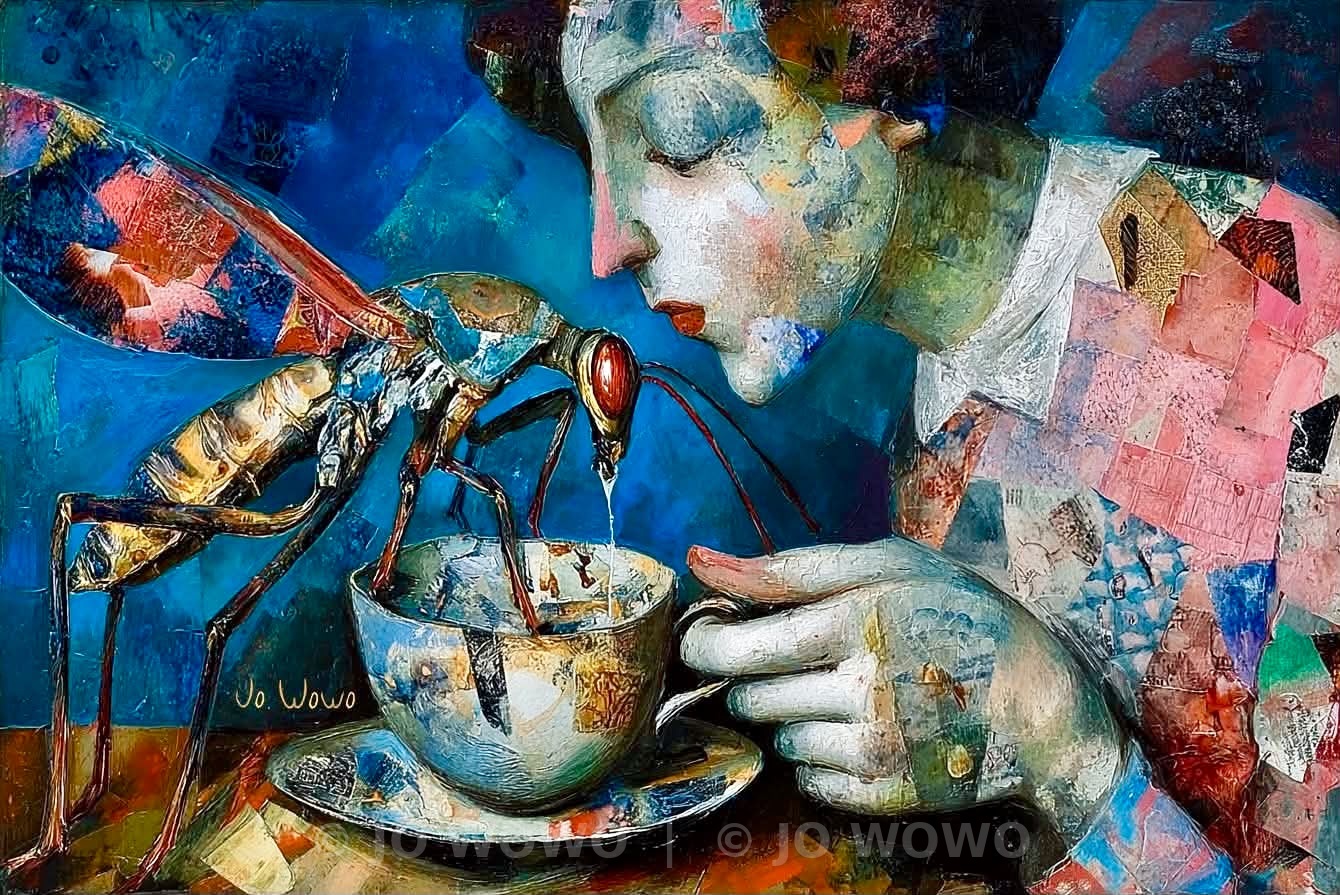
Duke was not, strictly speaking, a mosquito. Mosquitoes are small, annoying, forgettable. Duke was the size of a terrier, with wings like stained-glass windows that had survived a war - patches of deep indigo, rust red, and newsprint - and eyes like polished garnets that saw backward through time.
He first appeared the night her tea shop in Paris almost went bankrupt. She'd left a chipped porcelain cup out on the counter - her grandmother's cup - and found him perched on the rim in the morning, his needle-like proboscis stirring the cold tea.
She should have screamed. She didn't.
"You drink tea?" she had whispered.
"I drink memories," he had buzzed, his voice like a dry leaf scraping against silk. "Yours are too bitter.
Too much sugar would help."
That was the deal they made.
Every evening, Mara would brew one cup. Not for customers. For Duke. He would dip his legs into it - long, stilt-like legs that left no ripples - and sip, and with each sip, a single white thread would fall from his mouthparts back into the cup.
Condensed memory. Liquid time.
Tonight was different. The cup trembled in Mara's patchwork hands.
"The Collectors are coming," Duke said, not looking up. His ruby eye reflected her pale, collaged face. "They smelled you using my honey on that little boy last week. The one who forgot his mother's funeral."
Mara leaned closer, her breath fogging his wing. "You said a drop would help him sleep."
"It did. Now they want the source."
Outside, the deep blue of the painting - the deep blue of their little world - began to crack. Sirens, but not human sirens. A high, whining chorus, like a thousand tiny wings.
Duke suddenly pushed his whole head into the cup and drank deep. Then he looked at her, a pearl of glowing liquid hanging from his chin.
"Drink," he commanded.
"What? No - what does it do?"
"It makes you light enough to ride."
Mara didn't think. She pressed her lips to the rim where his mouth had been. The tea tasted of ozone and old summers and paper and -
The window exploded inward.
And for the first time in three years, Mara's teacup was empty.
She was already gone, clinging to Duke's back, her pink patchwork coat billowing like a sail as they crashed straight through the blue.
The tea hit like lightning in reverse.
One second Mara's knees were tucked under her tiny table in Paris, the next - she weighed nothing. Her patchwork coat wasn't cloth anymore, it was a hundred sewn-together moments - ticket stubs, recipe cards, a piece of her grandmother's apron - all fluttering.
"Hold the seam!" Duke screeched, and Mara grabbed the thick ridge on his back where his wings met.
They went THROUGH the wall. Not breaking it - through - the blue of it, like the blue was water.
Behind them, the Collectors poured into the shop.
They weren't insects. They were the negative of insects. If Duke was made of stained-glass and old gold, they were made of static and empty teacups. Human-shaped holes in the air, humming with a hunger that made the saucers rattle.
"MARA MARA. UNLICENSED BREWING."
Duke corkscrewed up, and the world tilted. The tea shop was suddenly below them, small as the cup they'd just left. The whole mountain range was a crumpled tablecloth. The Mediterranean was a spill of that same deep, textured blue.
"He used his memory on a mortal!" one of the Collectors shrieked, stretching a long, thin arm that kept stretching, and stretching -
"He's just a boy!" Mara yelled down, wind tearing her words. "He couldn't sleep!"
"Memory is currency! You do not give it away!"
Duke was fast, but he was heavy now. Two riders. He faltered, his jeweled wings beating slower. Mara felt him sinking.
"Duke - the cup! We left the cup!"
"Rule one, Mara! Never leave a full cup behind! They can track the steam!"
Mara looked at her hands. In her right, still clutched white-knuckled, was her grandmother's saucer. She'd grabbed it without thinking. On it, a single drop of Duke's honey-tea still trembled, catching the light.
She understood.
She tipped the saucer and let the drop fall.
It didn't fall down. It fell "open".
Where the drop hit the air, it bloomed into a doorway - not a neat portal, but a messy, collaged rip of a memory. Mara's memory.
A kitchen. Summer. 8 years old. Her grandmother pouring too much sugar into tea, laughing, saying "Sweetness is how you hide the medicine."
"The sweet spot!" Duke bellowed with joy and dove.
They plunged through.
The Collectors, who had never been children, who had never been given too much sugar by a grandmother, hit the edge of the memory and recoiled. Sweetness burned them. Unlicensed, unregulated, freely given kindness - it was poison to them.
The memory closed behind Mara and Duke with a soft "clink", like a cup being set down.
They were back in the tea shop. It was quiet. 6:18 PM. The chipped porcelain cup was on the table again, steaming. Full to the brim.
Duke, now small again - cat-sized, panting - perched on the rim.
Mara, solid again, slid down to the floor, laughing, her patchwork coat just a coat.
Outside, the hum of the Collectors faded, confused, unable to find the shop that was now hidden inside a memory of sugar.
Duke nudged the cup toward her with one long leg.
"Your turn," he said. "Drink. You'll need to remember how to hide us tomorrow too."
And together, they drank.
…
The young boy wasn't supposed to be part of the deal.
His name is Elias. He's 9. He comes to the tea shop after school because his aunt runs the bakery next door and she doesn't like him "moping around the ovens."
Two weeks before Duke warned Mara about the Collectors, Elias stopped coming for three days.
When he came back, he was wrong. Not sick-wrong. Hollowed-wrong.
He sat at Mara's smallest table — the one wobbling near the window - and didn't order. He just stared at his hands.
Mara knew that stare. It's the stare adults get after a loss, but it looks obscene on a kid.
She brought him chamomile, no charge. He didn't touch it.
"My mom," he whispered finally. "They had... they put her in the ground yesterday. Everyone was crying. I couldn't. I tried and I couldn't. I can't remember her face now. I try and it's all... static. Like a bad TV."
Grief had locked his memories up to protect him. That's what grief does to kids - it puts the good memories in a safe and loses the key, because the good memories hurt too much to touch.
Mara looked at Duke, who was pretending to be a strange sculpture on the shelf.
Duke gave her a tiny, almost imperceptible shake of his head.
- Rule two of brewing with a memory mosquito: Never give it to children. Their memories are too soft. They imprint. -
But Elias was looking at her like she was the last adult who hadn't lied to him that week.
So after he left, Mara did it. She took Duke's cup - the one with the pearly thread still swirling in it - and with an eyedropper, stole one single drop.
The next day she put it in Elias's hot chocolate.
She told him: "This is memory chocolate. You have to drink it slow and think of her laugh."
That night, Elias dreamed.
He didn't dream of the funeral. He dreamed of his mom in the kitchen, making a cake, her hands covered in chocolate, laughing because he'd tried to lick some and it dripped on the floor. He dreamed so clearly he could smell the chocolate.
He woke up crying. Hard, ugly, loud crying. The kind that finally lets air back in.
The next day he came back to the shop and hugged Mara around the waist and said, "I remembered."
That crying - that sudden release of a locked memory back into the world - that's what set off the alarm. The Collectors trade in memories. They keep the ledger. When a vault they sealed is broken open without payment, they hear it.
A child remembering his mother's laugh for free?
That was an unlicensed miracle. And they came to collect the tax.
That's why Duke was so angry. Not because Mara was kind. But because he knew exactly what the Collectors do to kind people.
— Sarino Tesandori
More Stories
The Whisper That Changed Nothing
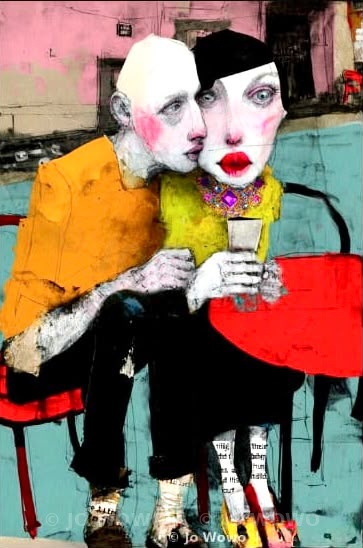
Every Thursday at four, they met at the same café. He always arrived first, carrying stories he had collected all …
Read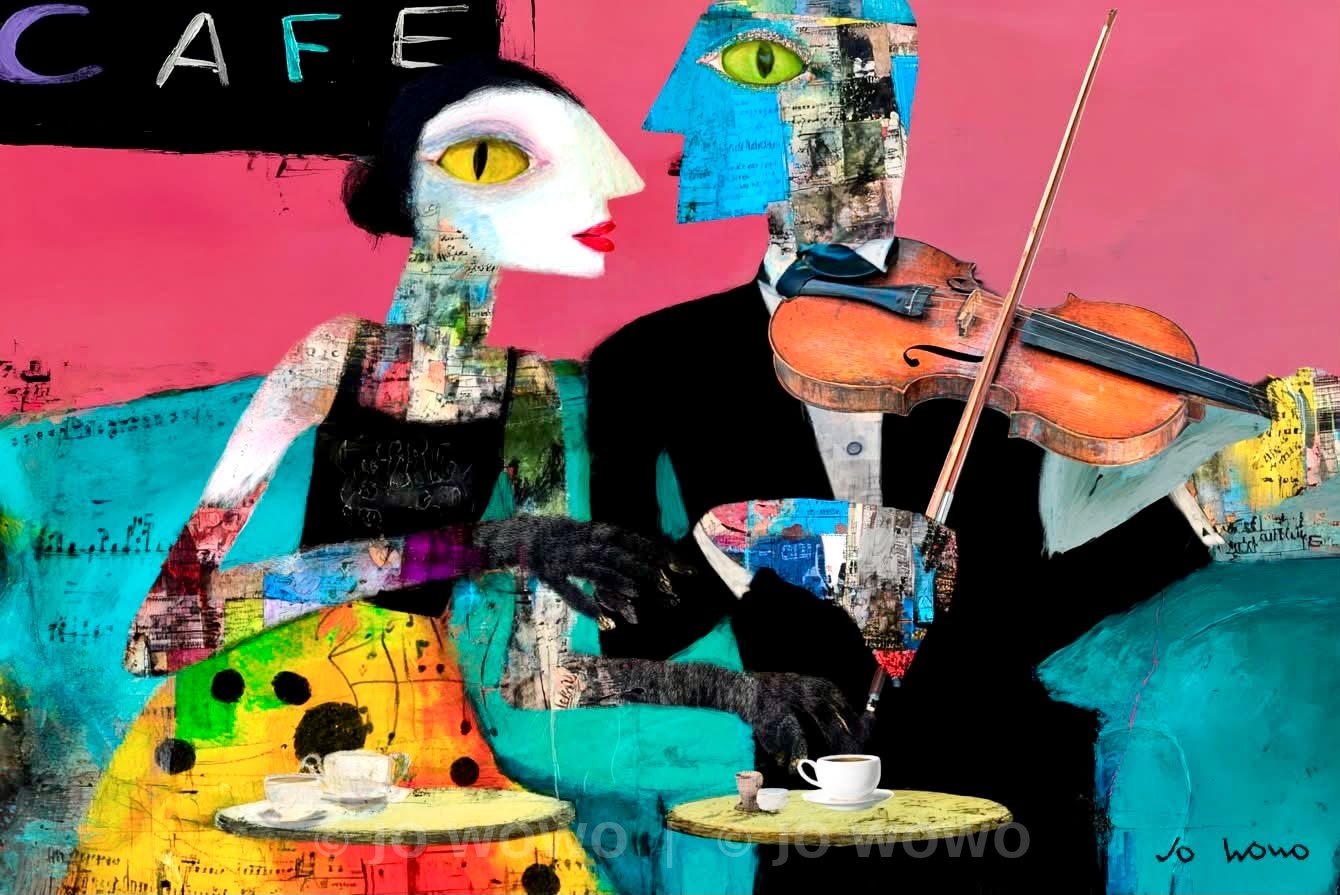
The Cafe of the Two Cats
They were not really people that night. That was the deal at Cafe L'Œil. In that cafe, at that corner …
Read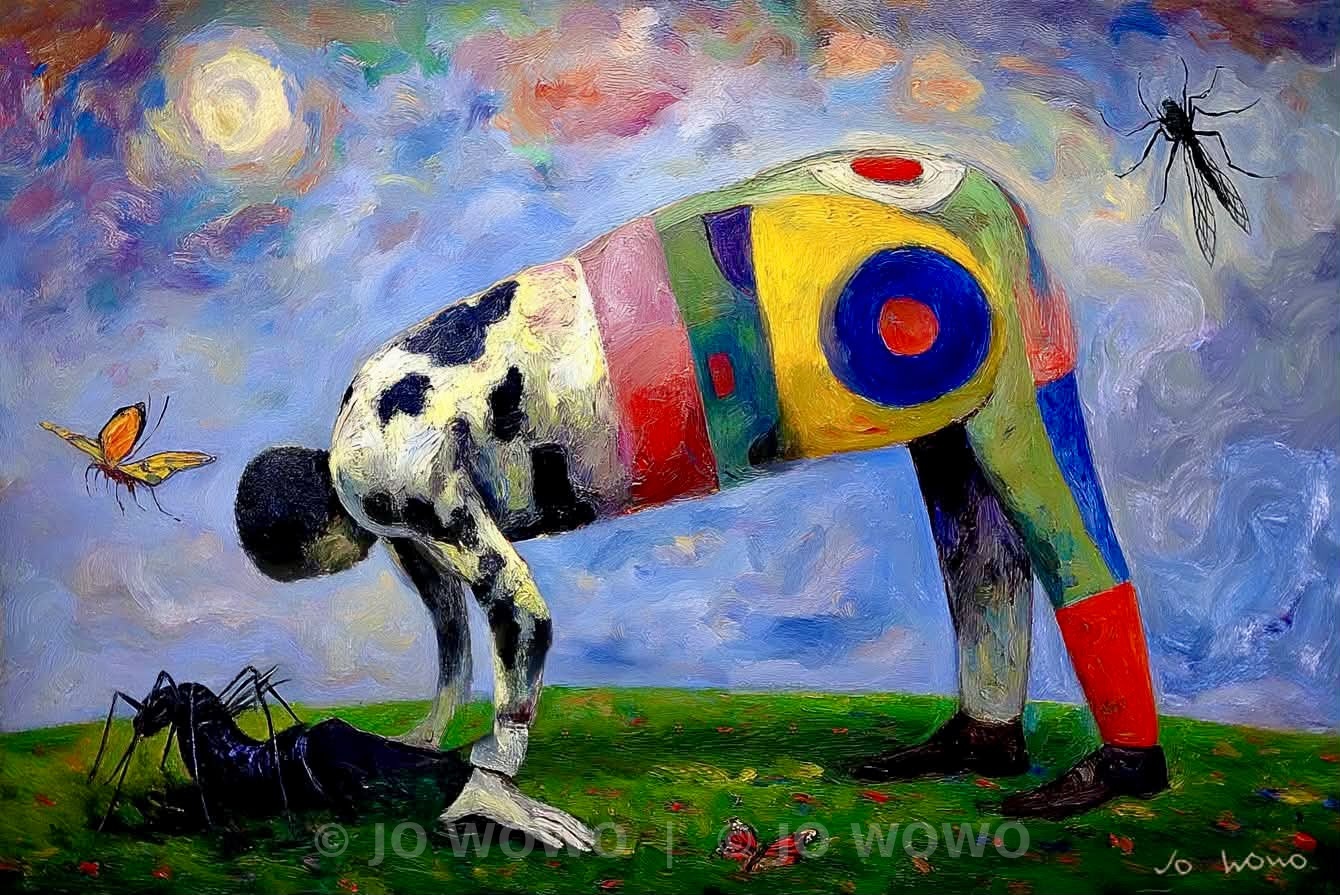
It's a Matter of Hide and Seek
Look at what he did: a man bent over until he is four-legged again. His body is patched - a …
Read